Parys’s Cosmic Secret: Sleeping on the Edge of Earth’s Oldest Impact
At Klipspruit Accommodation, we love sharing the hidden stories of Parys.
While the Vaal River and our charming streets draw visitors from across the country, the true magic of this area lies in a tale two billion years in the making.
You’re not just booking a riverside getaway—you’re sleeping on the edge of the most powerful event in Earth’s history.
Welcome to the Vredefort Dome. It’s not just a UNESCO World Heritage Site—it’s your backyard adventure, and it’s literally beneath your feet.
The Day the Sky Fell
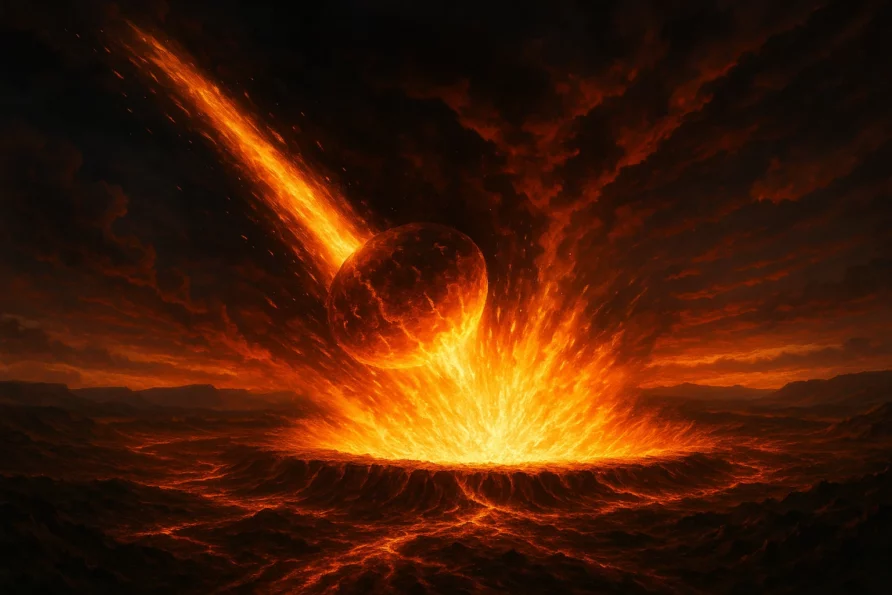
Two billion years ago, long before dinosaurs or even complex life existed, a meteorite larger than Table Mountain—roughly 10 kilometres wide—hurtled towards Earth at unimaginable speed. The impact released energy greater than a billion Hiroshima bombs, more than all nuclear weapons combined. For a few seconds, the Free State became liquid rock and dust, with temperatures hotter than the surface of the sun.
The collision created a crater over 300 kilometres wide, the largest and oldest ever confirmed on our planet. The land buckled, rocks melted, and shockwaves raced across the crust, leaving scars that would endure for eons.
When you wake up in Parys today, the rolling hills around you are not ordinary hills. They’re the upturned edges of that colossal crater, the peaceful result of millions of years of erosion reshaping cosmic violence into the tranquil landscape you see today. The course of the Vaal River, the ridges where artists paint at sunset, the trails where you’ll walk tomorrow morning—all are part of the “rebound dome,” the eroded root of that ancient impact.
The Dome Beneath Your Pillow
If you could peel back the grass and soil around Parys, you’d see twisted layers of granite and quartzite—rock that was blasted upward from deep underground in that single catastrophic moment. Today, it’s calm, green, and beautiful. Yet under every step lies the memory of cosmic violence, a reminder that destruction and creation often share a boundary.
This is where the story becomes deeply human. You’re not just staying in a guest house; you’re sleeping on the edge of Earth’s oldest impact site. Your morning coffee, your riverside walk, your star-gazing session—all carry a sense of perspective. The stars overhead are the same ones that sent this fragment crashing here when our world was impossibly young.
Touch a Piece of Planetary History: The Rock Hunter’s Guide
The impact created unique geological fingerprints that you can discover on guided walks, self-drive routes, or designated trails. You don’t need a geology degree to find them—the proof is literally lying on the ground, waiting.
Shatter Cones: The Earth’s Shockwave Fossil
These are not ordinary rocks. Shatter cones are rare, conical-shaped formations showing a distinctive horsetail pattern—small cones etched into bedrock by the impact’s shockwaves. They are the first-ever forensic evidence of a meteorite impact, formed instantly as the shockwave shattered the Earth’s crust.
Holding a shatter cone is like holding a snapshot of that single, catastrophic second two billion years ago. They are definitive proof that this wasn’t a volcano or earthquake, but an impact from space. Their unique pattern is unmistakable once you know what to look for during your hike.
Pseudotachylite: The Scar Tissue of the Planet
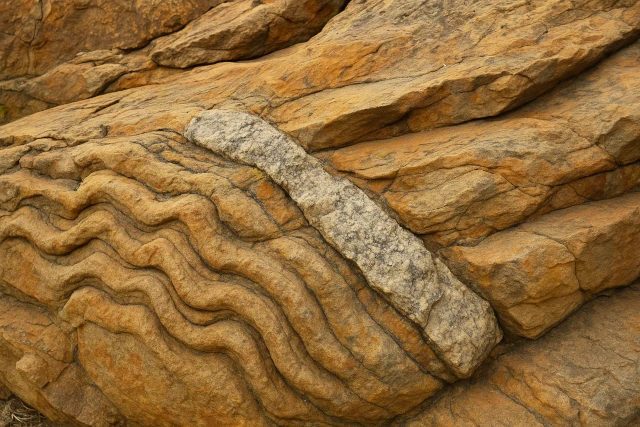
This dark, glassy rock looks like volcanic obsidian but has a far more dramatic origin. The impact was so violent it instantly melted the Earth’s crust, splashing molten rock into fractures and cracks where it cooled. These dark veins cutting through lighter stone are the literal scars from the event, stitching the landscape back together.
Finding pseudotachylite means you’re touching rock that was flash-melted in a planetary-scale explosion—impact melt that preserves the moment when solid bedrock briefly turned to liquid.
Other Impact Fingerprints
Along the trails and riverbanks, you might also notice layers folded like soft dough or granophyre dykes—remnants of impact-melt that cooled slowly beneath the surface. Each formation tells part of the same story: a planet reshaped in seconds, then patiently re-sculpted over eons. For travelers, these are not just rocks—they are physical links to a time before life as we know it existed, a natural museum underfoot.
The Golden Connection: From Fire to Fortune
Here’s a fascinating twist that connects the cosmic to the economic. The Vredefort impact didn’t bring gold to the region, but it played a crucial role in preserving and concentrating it.
The immense energy shattered the existing gold-bearing reefs of the Witwatersrand Basin, effectively “upgrading” them. The shock uplift tilted and protected these layers from erosion, rearranging the geology and creating new pathways that enriched deposits. Many researchers believe that the very gold that built Johannesburg and shaped South Africa’s modern economy might still exist because of this meteorite.
So when you enjoy a sundowner in Parys, remember that the ground beneath you was reshaped by a force that also helped build a nation’s fortune. It’s a poetic reminder of how planetary violence can become the foundation for human prosperity.
Where Deep Time Meets Human Time
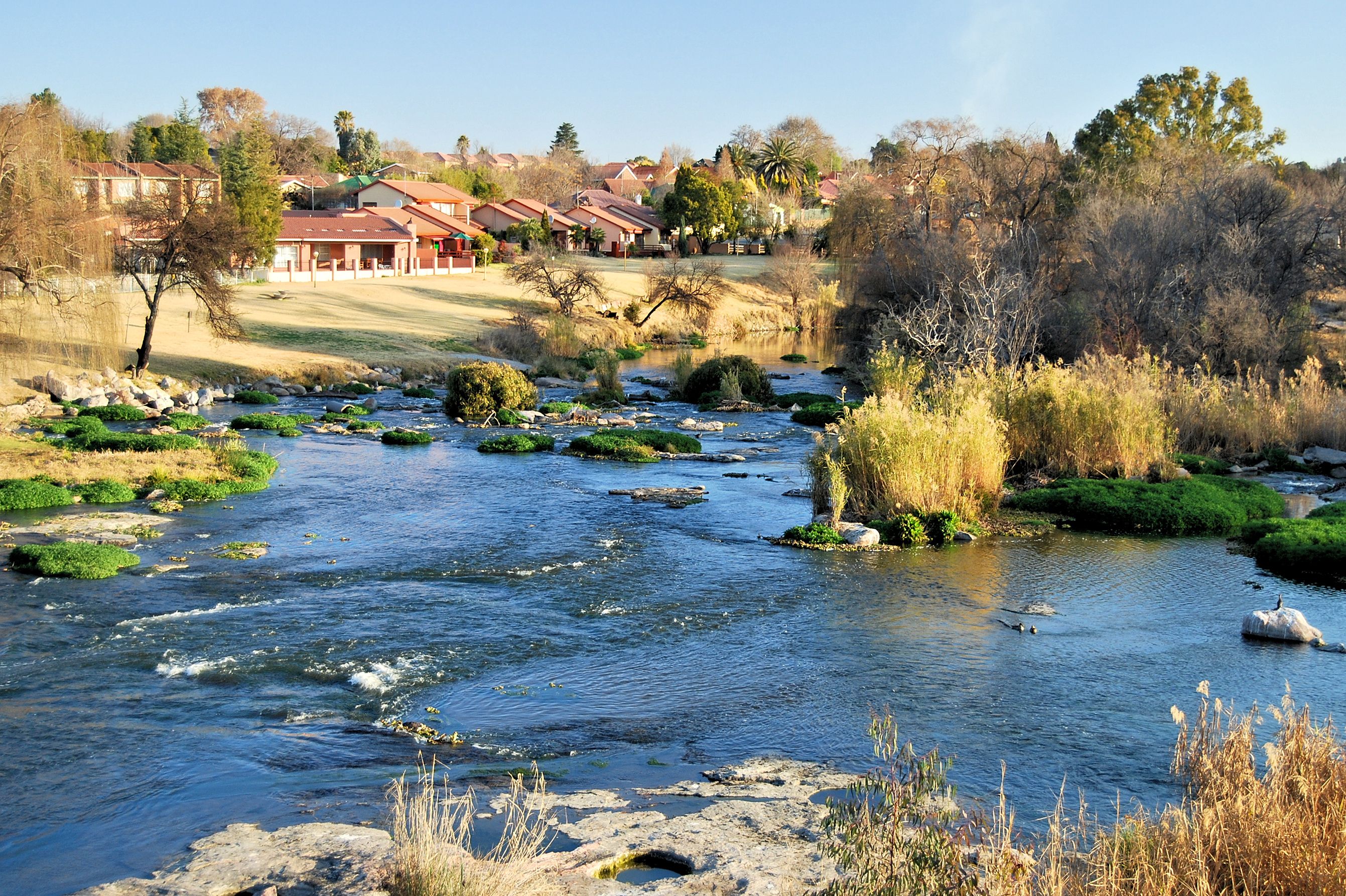
Today, life around Parys moves at a gentler rhythm. Locals fish along the Vaal, weekenders escape city noise for river sunsets, and artists capture the light on ancient ridges. Few realize they’re sitting inside a 2-billion-year-old scar.
The meteorite didn’t only sculpt rocks; it shaped everything living on them. The fractured ridges and valleys created by the impact host diverse ecosystems—from grasslands to rocky outcrops supporting unique plant species. The Vaal River cuts through the dome’s rings, providing water, fertile soil, and scenic spots for kayaking, birding, and photography. Every element of life here—the soil, the views, even the vineyards and grazing farms—owes something to that ancient collision.
This contrast is what makes staying here so special. You’re experiencing quiet reflection in a place born from unimaginable chaos, finding peace on a landscape that has witnessed almost half of Earth’s history—from the first microbial life to modern civilization.
Your Vredefort Dome Adventure Awaits
Staying in Parys is more than a river getaway; it’s a front-row seat to planetary history. Here’s how to explore:
Go on a Guided Tour: The best way to understand and find these geological treasures is with a local expert who can bring the story to life. Guides know exactly where to find shatter cones and can explain what you’re seeing in the landscape.
Visit the Interpretation Centre: The Vredefort Dome World Heritage Site Interpretation Centre offers exhibits and context that make the geology accessible and fascinating.
Take a Self-Drive Tour: Explore the designated Vredefort Dome routes at your own pace, stopping at viewpoints and rock formations along the way.
Simply Look Closer: On your next walk or hike, keep an eye out for those distinctive rocks. Once you know what to look for, the landscape will never look the same again. Every stone tells a story.
A Story Written in Stone
The Vredefort Dome is not just a geological monument; it’s a story about survival and transformation, about how the most violent events can create beauty and opportunity over time. What began as unimaginable destruction became a cradle for water, life, and human settlement.
When visitors stay with us, they become part of an ancient narrative—one that connects comfort and curiosity with cosmic history. Morning walks take on new meaning. Evening conversations under the stars carry extra weight. You’re not just passing through; you’re resting on a landscape that remembers when the sky fell.
The story of the Vredefort Dome is a humbling reminder of our planet’s dynamic history, written in the stones beneath our feet and the hills on the horizon.
Ready to explore where worlds collided?